Which worker placement board game is actually worth your money in 2026 — and which ones will sit on your shelf collecting dust after two plays? That's exactly what we're here to answer. And if you want our quick top pick before diving into the full breakdown, Viticulture Essential Edition consistently earns its place as one of the most satisfying and approachable gateway games in the genre.
Worker placement games — where you assign your playing pieces (workers) to specific spots on the board to claim actions or resources — have exploded in popularity over the past decade. The tension of watching someone snag the exact spot you needed, the satisfaction of executing a perfectly timed strategy, the variety of themes ranging from medieval kingdoms to prehistoric civilizations: this genre delivers something for almost everyone. Whether you're new to strategy gaming through arts and hobbies or a seasoned tabletop veteran looking for your next obsession, there's a worker placement game on this list for you.
According to Wikipedia's overview of worker placement mechanics, the genre traces its roots to games like Keydom and Caylus in the early 2000s, and it has only grown richer since then. In this guide we've reviewed seven of the best worker placement games available right now — covering everything from beginner-friendly options to complex brain-burners — so you can find exactly what you're looking for.
Contents




Viticulture Essential Edition is the game that turns skeptics into believers. Set in the rolling vineyards of Tuscany, you and your fellow players inherit run-down wineries and spend the game building them into thriving operations. You plant vines, harvest grapes, age wine in your cellar, and fulfill wine orders to earn victory points. The Essential Edition bundles in the popular Tuscany expansion's visitor cards, giving you a polished, ready-to-play experience right out of the box.
What makes Viticulture so special is how it handles the worker placement tension. Each season — summer and winter — offers a different set of action spaces, and the player who places their worker on a space first often gets a bonus. But the game is never cutthroat to the point of frustration. Visitor cards inject variety and some welcome unpredictability, so no two games feel the same. It scales beautifully from one to six players, which is rare for this genre.
If you're introducing friends to worker placement games for the first time, Viticulture is one of the safest picks you can make. The theme is universally appealing, the rules explanation takes about 20 minutes, and new players can make meaningful decisions from turn one without feeling overwhelmed. Experienced gamers will find enough depth to keep coming back, especially once you start optimizing your wine order strategy and timing your seasons carefully.
Pros:
Cons:
Agricola is the game that defined modern worker placement for a generation of board gamers, and the Revised Edition brings it up to date with cleaner rules and updated components. You play as a farming family in 17th-century Central Europe, struggling to keep your family fed while expanding your farm, raising livestock, and building improvements. The pressure never lets up. Every round ends with a feeding phase, and if you can't put food on the table, you take begging cards that hurt your final score.
This constant food pressure is what gives Agricola its famous bite. You'll never have enough actions to do everything you want to do, and that tension — choosing between plowing a field, collecting resources, building a room, or snatching a card before your opponent does — is the heart of the experience. The occupation and minor improvement cards create an enormous amount of strategic variety, so each game plays differently depending on what cards you're dealt.
Agricola is genuinely challenging, and that's the point. It's not the most relaxing evening you'll have, but it's deeply rewarding when your farm engine clicks into place. The Revised Edition trims some of the complexity from the original without sacrificing depth, making it more approachable for players who bounced off earlier versions. For two players in particular, it's one of the finest strategy games ever made. Just be honest with yourself about your group's appetite for difficulty before buying.
Pros:
Cons:
Architects of the West Kingdom does something clever that most worker placement games don't: it lets you place multiple workers on the same space. Instead of one worker per space, you're sending your architects out to gather resources, construct buildings, and recruit apprentices in the Carolingian Empire around 850 AD. The twist is that your workers can be captured by opponents and imprisoned — and getting them back requires spending actions to retrieve them. This creates a dynamic push-and-pull that feels genuinely different from the genre norm.
The theme is beautifully realized, with hand-crafted illustrations that make the game feel like an artifact rather than just a product. You're competing to impress the king by constructing the most impressive landmarks, and the morality system adds another layer of strategy — some actions are "black market" moves that earn you resources faster but damage your virtue track, affecting your end-game scoring. Do you stay righteous and earn bonus points, or cut corners and fall behind morally?
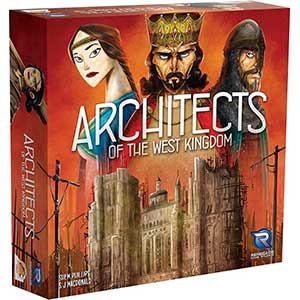
For players who love medium-weight games with strong thematic storytelling, Architects of the West Kingdom hits a sweet spot that's hard to find. It's more complex than Viticulture but less punishing than Agricola. The 1–5 player count and 60–80 minute play time make it practical for game nights, and the variable buildings available each game ensure strong replay value. If you're looking to paint miniatures alongside a rich hobby, you might also enjoy reading about the best paints for Warhammer in 2026 — the crossover between miniature gaming and board gaming communities is bigger than ever.
Pros:
Cons:
Stone Age is the worker placement game that bridges the gap between family games and serious strategy. Set in the prehistoric era, you're leading a tribe of early humans through the challenges of survival — gathering wood, clay, stone, and gold, growing your population, and advancing your civilization. The rules are approachable enough that teens and adults can learn together in about 15 minutes, yet the strategic decisions are substantive enough to keep experienced gamers engaged.
The dice-rolling for resource gathering introduces a layer of luck that more hardcore gamers sometimes criticize, but for most groups this is actually a feature, not a bug. Limited action spaces force you to plan carefully, but the randomness of the dice means you can't perfectly predict outcomes, which keeps every round feeling fresh. You can hedge against bad rolls by sending more workers to the same resource spot, trading depth of strategy for reliability.
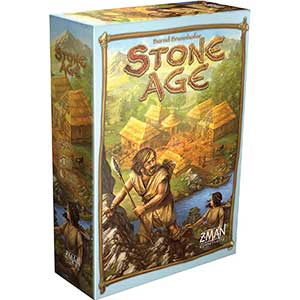
If you're buying for a mixed group — some gamers, some not — Stone Age is one of the easiest sells on this entire list. The prehistoric theme is universally understood, the components are chunky and tactile (those little wooden hut pieces are satisfying to hold), and the 60–90 minute playtime hits a comfortable sweet spot. Z-Man Games has maintained consistently good production quality here, and the game holds up remarkably well for something that's been on the market for years. A great starting point if your group is just beginning to explore the worker placement genre.
Pros:
Cons:
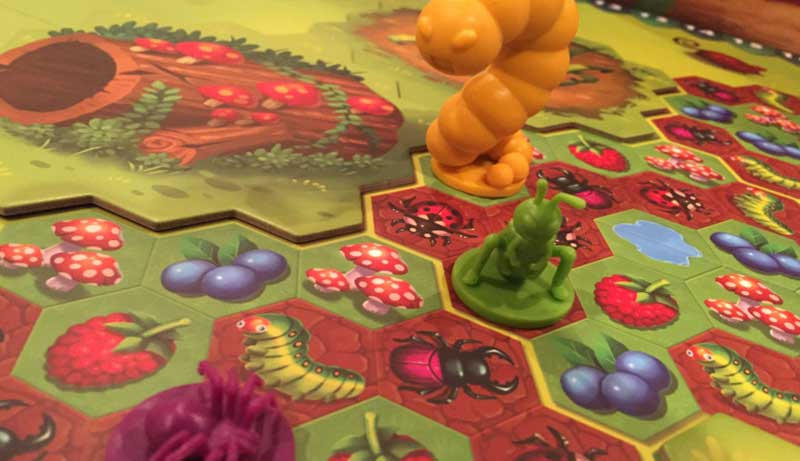
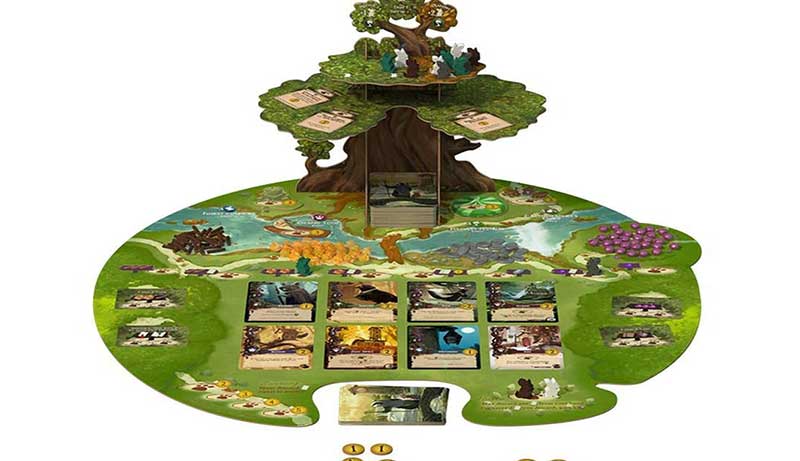
Everdell is arguably the most beautiful game on this list. Set in a magical forest valley called Everdell, you're building a city of critter citizens — squirrels, mice, hedgehogs, and others — beneath the iconic Ever Tree (a large cardboard 3D tree that towers over the center of the board). The artwork by Andrew Bosley is breathtaking, and the whole production has a warmth and charm that makes it feel unlike any other game on your shelf.
But Everdell isn't just a pretty face. It combines worker placement with tableau building (constructing a tableau means building up a personal collection of cards that interact with each other), and the combination creates a satisfying engine-building experience. Cards interact in clever ways that reward careful planning, and the progression from a small handful of cards to a bustling critter city is genuinely enjoyable to experience. The award-winning design has earned Everdell a permanent place in the collections of both casual and serious gamers.
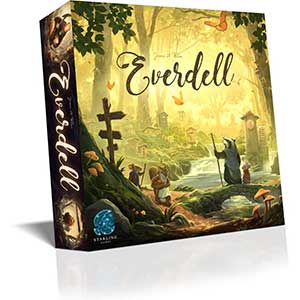
One thing to keep in mind: the edition matters. The 2026 version available on Amazon is a reprinted standard edition with some refinements to rulebook clarity and component quality. The game scales well from one to four players, and the solo mode is a genuine highlight — it gives you a specific score target to beat using a clever automa system. If you care about how your games look on the table (and your guests do, too), Everdell will earn compliments every single time you set it up. Board game hobbyists who also work with craft materials may want to check out the best glue for cardstock in 2026 for protecting or customizing game components.
Pros:
Cons:
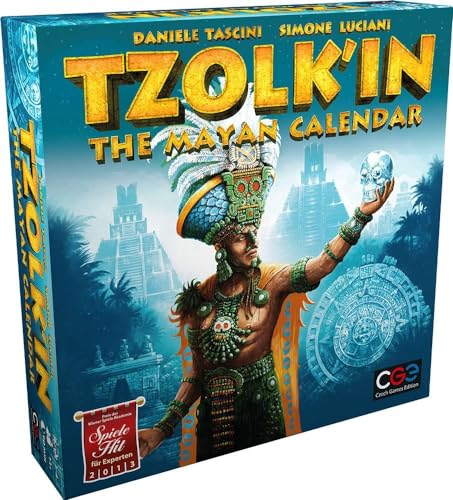
Tzolk'in is unlike anything else on this list — and probably unlike anything else in your game collection. The centerpiece of the board is a set of interconnected plastic gears (yes, actual gears) that physically rotate at the end of each round. Workers placed on the gears are carried forward in time as the gears turn, accumulating power the longer you leave them in place. Pull them off too early and you get weak actions; wait longer and the rewards multiply. It's a brilliant and tactile take on the worker placement formula.
The Mayan theme is atmospheric and well-integrated into the mechanics. You're managing resources, constructing buildings, offering sacrifices to the gods, and racing to complete monuments — all while navigating the gear-driven action system. The time pressure of the Tzolk'in calendar creates a natural game structure that forces you to plan multiple turns ahead. It's a brain-burner in the best sense: you'll sit there genuinely pondering your move, and the payoff when your long-term plan comes together is immense.
Be honest about your audience before buying this one. Tzolk'in plays 2–4 players and takes around 90 minutes, but it rewards players who enjoy thinking several steps ahead. Casual gamers may find the gear system more disorienting than exciting at first. That said, for groups who love complex strategy games, Tzolk'in is a genuine masterpiece of design — the kind of game that generates table talk for days afterward. Czech Games Edition has built an outstanding reputation for innovative mechanics, and this is one of their crown jewels.
Pros:
Cons:
Pendulum throws out one of the most fundamental rules of worker placement — the turn order — and replaces it with something genuinely radical: real time. Every player acts simultaneously, using three physical sand timers to govern which action spaces are available and when. There are no turns. You place workers, flip timers, execute actions, and retrieve workers in one continuous flow of activity, all while your opponents are doing the same thing at the same time. It's chaotic, energizing, and completely unlike anything else on this list.
You play as a powerful noble competing to succeed the Timeless King as ruler of Dünya. Time itself is your most precious resource, and the entire game is about making smarter investments of time than your opponents — not just acting faster, but acting more wisely. Do you commit your workers to long-payoff actions while your opponents scramble for quick gains? The four victory tracks (power, prestige, popularity, and legendary achievement) ensure that multiple paths to victory are viable, reducing the king-of-the-hill dynamic that can plague some competitive games.
Pendulum is not for everyone, and that's intentional. Some players genuinely hate the idea of real-time board gaming — the lack of a pause to think can feel stressful rather than exciting. But for groups who love high-energy, unconventional experiences, Pendulum delivers something truly memorable. It also plays 1–5 players, so the solo mode is available if you want to practice your time management without the social pressure. Stonemaier Games, the same publisher behind Viticulture, brings their usual high component quality to the table here. If you like collecting resin pieces for tabletop games, you might also find our guide to the best resin for casting in 2026 useful for customizing game components.
Pros:
Cons:
Not all worker placement games are equal, and the "best" one depends heavily on who's playing, how often, and what kind of experience you're after. Here's what to think about before you buy.
Your player count matters a lot in this genre. Some games shine brightest at two players (Agricola is a prime example), while others need three or four to generate the action-blocking tension that makes worker placement fun. If you regularly play with five or six people, you need a game built for that — Viticulture is one of the few that handles six players well without feeling stretched. Most games on this list are designed for two to four players, so check the box before you buy. Also think about your group's experience level. Bringing Tzolk'in or Agricola to the table with first-time strategy gamers is a recipe for a frustrating evening. Start with Stone Age or Viticulture, then graduate from there.
Board game hobbyists talk about "game weight" — how mentally demanding a game is — on a scale from light to heavy. On this list, Stone Age and Viticulture sit on the lighter end. Architects of the West Kingdom and Everdell sit comfortably in the medium range. Agricola and Tzolk'in are heavier games that demand real mental effort. Pendulum is in a category of its own because its challenge is more about real-time management than cognitive complexity. Think honestly about what your group finds fun: some people love the crunch of a heavy game, others find it exhausting. There's no wrong answer, but matching the weight of the game to your group's appetite is the single most important buying decision you'll make.
Worker placement games come in an enormous range of themes, and theme matters more than people admit. If the setting resonates with you, you'll forgive a clunky rule or two. If it doesn't, even great mechanics can feel dry. Wine-making in Tuscany (Viticulture), prehistoric civilization (Stone Age), medieval architecture (Architects of the West Kingdom), magical woodland (Everdell), Mayan civilization (Tzolk'in), medieval farming (Agricola), and fantasy noble competition (Pendulum) — these settings all appeal to different players. Ask yourself what worlds you'd genuinely enjoy spending two hours in. The best game for you is the one you'll actually want to play again and again.
A good worker placement game should still feel fresh after 20 plays. The games on this list achieve replay value through different means: Agricola and Everdell use large card decks that generate different strategic combinations each game. Viticulture uses seasonal visitor cards and variable setups. Tzolk'in's gear system creates naturally different pacing depending on player decisions. Before you buy, also check whether the base game is satisfying on its own or if it's really designed to be expanded. All seven games reviewed here are complete, satisfying experiences in their base box — no required expansions. That said, Viticulture's Tuscany and Architects' Age of Artisans expansion are both well-regarded if you eventually want more content.
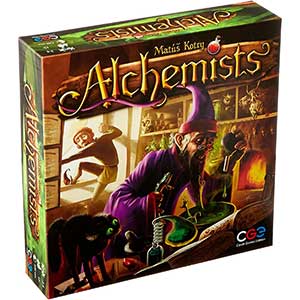
A worker placement game is a type of strategy board game where you place your playing pieces (called workers) onto specific spots on the board to claim actions or gather resources. Once a spot is taken, other players often can't use it until your worker leaves. The genre gets its name from the idea that you're "placing" your workforce to carry out tasks. Games like Agricola, Viticulture, and Stone Age are classic examples that helped define this category in the tabletop world.
Viticulture Essential Edition and Stone Age are the two best starting points for new players. Both have approachable rules, appealing themes, and enough strategic depth to feel rewarding without overwhelming first-timers. Viticulture is the slightly more sophisticated pick, while Stone Age is the better choice if your group includes people who rarely play board games. Either one will give you a solid introduction to what makes worker placement such a compelling genre.
Most worker placement games run between 60 and 120 minutes once everyone knows the rules. Stone Age sits on the shorter end at about 60–90 minutes. Agricola, Viticulture, Everdell, and Tzolk'in typically run 90 minutes for a standard game. Pendulum is unusual because its length is partially determined by the sand timers — it typically runs about 60–90 minutes. Add 15–30 minutes to any of these estimates for your first few plays while everyone is learning the rules.
Yes — several of the games on this list include dedicated solo modes. Agricola, Viticulture, Everdell, and Pendulum all include solo play options. Everdell's solo automa system and Agricola's solo challenge mode are particularly well-regarded. Stone Age and Tzolk'in are primarily multiplayer experiences. If solo play is important to you, Everdell and Agricola are your two strongest options, both offering replayable and satisfying single-player challenges.
These two genres overlap significantly — most worker placement games include resource management as a core element. The key distinction is the placement mechanism: in a worker placement game, the act of claiming an action space with your piece (and blocking opponents from using it) is central to the gameplay. Resource management games can achieve the same economic goals through other means, like card drafting or market purchases. In practice, many games blend both, and worker placement is best understood as a specific type of action-selection mechanism rather than a completely separate genre.
It depends on the game and the child's age. Stone Age is rated for ages 10 and up and is genuinely playable with older kids who have some board game experience. Viticulture is accessible for mature pre-teens. Everdell, with its charming woodland theme, appeals visually to younger players but is best for ages 14 and up due to the card interaction complexity. Agricola, Tzolk'in, and Pendulum are adult-oriented games that require patience and strategic thinking beyond most younger children's current experience level.
The best worker placement game isn't the most complex one — it's the one your group will actually pull off the shelf and play again next week.


About Lindsey Carter
Lindsey and Mike C. grew up in the same neighborhood. They also went to the same Cholla Middle School together. The two famillies from time to time got together for BBQ parties...Lindsey's family relocated to California after middle school. They occasiotnally emailed each other to update what's going on in their lives.She received Software Engineering degree from U.C. San Francisco. While looking for work, she was guided by Mike for an engineering position at the company Mike is working for. Upon passing the job interview, Lindsey was so happy as now she could finally be back to where she'd like to grow old with.Lindset occasionally guest posted for Mike, adding other flavors to the site while helping diverse his over-passion for baseball.
You can get FREE Gifts. Or latest Free phones here.
Disable Ad block to reveal all the info. Once done, hit a button below
 im
im