My neighbor called me last spring, genuinely frustrated. He'd spent over $12,000 on a solar setup and was barely seeing a dent in his electric bill. The root problem? Nobody walked him through how to choose solar panels that actually matched his home's energy use and roof conditions. Don't make the same mistake — this guide breaks it all down so you can buy smart and stop guessing.

Choosing solar panels comes down to three things: your energy needs, your roof setup, and the panel technology itself. Get those three right and you'll be generating clean power for 25 years or more. Miss one, and you could end up like my neighbor — paying for a system that underdelivers.
If you're brand new to solar concepts, start with our primer on solar energy, energy efficiency, and geothermal energy — it gives you the foundation you need before spending a dime. Once you're up to speed, come back here and we'll get specific.
Contents
Not every home is a great solar candidate right now. Before you start comparing panels, do a quick audit of your situation.
If you check most of those boxes, you're in a strong position to move forward.
Going solar makes sense for a lot of homeowners — but not all of them, and not always right now. Hold off if any of these apply:
Warning: Installing panels on a roof that needs repairs soon means paying to uninstall and reinstall them later — often $1,500–$3,000 extra. Fix the roof first, then go solar.
The biggest mistake buyers make is jumping straight to panel brands and prices without first knowing how much power they actually need. Start with the numbers.
Pull up your last 12 months of electric bills and find your total kilowatt-hour (kWh — a unit of energy equal to 1,000 watts used for one hour) consumption. Then run this simple calculation:
For example: 9,000 kWh/year ÷ 365 = ~24.7 kWh/day. With 5 peak sun hours, you'd need roughly 5 kW of panels — about 14 to 17 standard 300W panels.
Panel efficiency (how much sunlight converts to electricity) and wattage (power output per panel) are the two numbers you care about most. Here's how the main types compare:
| Panel Type | Efficiency Range | Typical Wattage | Cost Level | Best For |
|---|---|---|---|---|
| Monocrystalline | 19%–23% | 300W–450W | Highest | Small roofs, max output |
| Polycrystalline | 15%–18% | 250W–350W | Mid-range | Large roofs, budget builds |
| Thin-Film | 10%–13% | 100W–200W | Lowest | Flat roofs, flexible installs |
Higher efficiency doesn't automatically mean better value. If you have plenty of roof space, polycrystalline panels can deliver solid ROI at a lower upfront cost per watt.
Once you know your target wattage, you need to pick the right panel technology. Each type has real trade-offs.
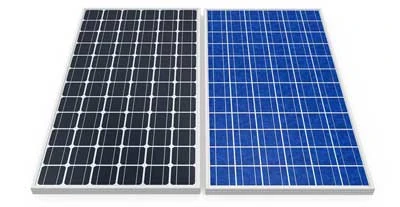
Monocrystalline panels are cut from a single silicon crystal. They're the most efficient option on the market and perform better in high heat and low-light conditions. Polycrystalline panels are made from melted silicon fragments — slightly less efficient, but noticeably cheaper.
For most homeowners, monocrystalline is worth the premium. Needing fewer panels often offsets the higher price per panel. For a real-world benchmark, our Silfab SLA-M Monocrystalline Solar Panel review shows exactly what a quality mono panel delivers in specs and real output.
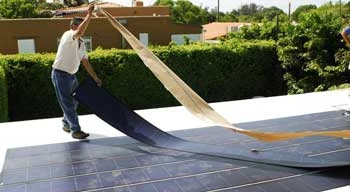
Thin-film panels are lightweight and flexible — you can mount them on curved surfaces or low-pitch roofs. But their lower efficiency (10–13%) means you need significantly more of them to match a crystalline system's output.
Pro Tip: When comparing thin-film to crystalline panels, check power output per square foot — not just the sticker price. A "cheaper" thin-film setup that requires twice the roof space usually costs more overall when you factor in mounting hardware and labor.
Panels are only part of the system. The supporting equipment determines how well everything works together — and how long it lasts.
A solar charge controller regulates the voltage and current flowing from your panels to your batteries. Without one, you'll overcharge and ruin your battery bank fast. Our guide on how to select a solar charge controller breaks down the two main types — PWM (pulse-width modulation) and MPPT (maximum power point tracking) — and helps you figure out which one fits your setup.
An inverter converts DC (direct current) power from your panels into AC (alternating current) power that your home appliances actually use. Key choices:
If you want power at night or during grid outages, you need a battery bank. Not all batteries perform the same. Look for these specs:
For detailed comparisons, our roundup of the 10 best deep cycle solar batteries covers AGM, gel, and lithium options at multiple price points. The U.S. Department of Energy also recommends adequate storage capacity if you're targeting full energy independence.
Building a portable or vehicle-based solar setup? Browse our automotive accessories section for solar chargers and portable power gear designed for cars, trucks, and trailers.
Even a well-installed system hits snags. Knowing how to diagnose problems quickly saves you money and frustration.

If your output drops suddenly or never hits the expected numbers, work through this checklist:
Installation problems often show up weeks or months after the job is done. Watch for these red flags:
If basic checks don't identify the problem, a professional energy audit with thermal imaging can find faults your monitoring app can't.
Most American homes use between 10,000 and 12,000 kWh per year, which typically requires 20 to 30 standard 350W panels. Your actual number depends on your specific energy use, your local peak sun hours, and the efficiency of the panels you choose.
Monocrystalline panels are cut from a single silicon crystal and offer higher efficiency (19–23%) and better performance in heat and low light. Polycrystalline panels are made from multiple silicon fragments and are slightly less efficient (15–18%) but cost less per panel — a good choice if you have plenty of roof space.
Quality solar panels carry 25-year performance warranties and routinely last 30 years or more. Most manufacturers guarantee at least 80% of original output after 25 years. Inverters typically need replacement after 10–15 years, which is the more common maintenance cost.
Yes — solar panels still generate electricity on cloudy days, typically at 10–25% of their rated output depending on cloud density. Germany, one of the world's largest solar markets, has far less sunshine than most of the U.S., which demonstrates that solar works in less-than-ideal conditions.
Your inverter's watt capacity should match or slightly exceed your total panel wattage. For a 6 kW panel system, a 6,000W inverter is the minimum. Add a small buffer — a 7,000W inverter for a 6 kW system — to handle momentary peak loads without clipping output.
Solar panels need very little maintenance. Rinse them with a garden hose two to four times per year to remove dust and debris — more often if you live in a dusty area or under trees. Check your monitoring system monthly for unexpected output drops, and schedule a professional inspection every five years.
Yes, but you'll need to prioritize high-efficiency monocrystalline panels to maximize output from limited space. A smaller system still cuts your bill — it just won't eliminate it entirely. A 3 kW system on a small south-facing roof can realistically offset 30–50% of a typical home's energy use.
You now have everything you need to make a confident decision — calculate your energy needs, match the right panel type to your roof, and build out the rest of your system with a quality inverter and battery bank. Start by pulling your last 12 months of electric bills today, run the quick capacity calculation from this guide, and get at least three quotes from certified installers in your area. That one afternoon of homework could save you thousands over the life of your system.


About Lindsey Carter
Lindsey and Mike C. grew up in the same neighborhood. They also went to the same Cholla Middle School together. The two famillies from time to time got together for BBQ parties...Lindsey's family relocated to California after middle school. They occasiotnally emailed each other to update what's going on in their lives.She received Software Engineering degree from U.C. San Francisco. While looking for work, she was guided by Mike for an engineering position at the company Mike is working for. Upon passing the job interview, Lindsey was so happy as now she could finally be back to where she'd like to grow old with.Lindset occasionally guest posted for Mike, adding other flavors to the site while helping diverse his over-passion for baseball.
You can get FREE Gifts. Or latest Free phones here.
Disable Ad block to reveal all the info. Once done, hit a button below
 im
im