If you need one reliable pick right now, the Howard Leight Impact Sport delivers electronic hearing protection at a price almost every hunter can afford — and it just works. That said, the right earmuff depends on your budget, your environment, and how long you plan to wear it, so read on before you decide.
A single unsuppressed gunshot registers around 140–165 dB. Permanent hearing damage starts at just 85 dB with repeated exposure, according to NIOSH (National Institute for Occupational Safety and Health). The problem for hunters is that you can't just plug your ears and call it good — you need to hear that buck stepping through dry leaves, your hunting partner signaling from across the field, or a dog working through brush 200 yards out. That's exactly what electronic hearing protection solves. It amplifies soft ambient sounds while cutting off the signal the instant a shot fires.
In this guide, you'll find seven of the best hearing protection options for hunting in 2026 — reviewed by NRR rating (Noise Reduction Rating, the standard decibel-reduction score), build quality, comfort, and real-world hunting use. If you're also gearing up for the field, check out our guide to the best broadheads for black bear to round out your setup. And for everything else outdoors, browse the sports & outdoors category.

Contents
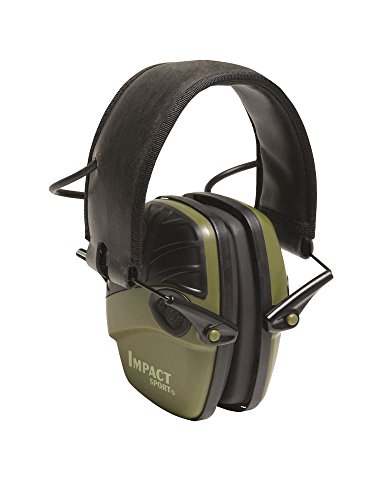




The Howard Leight Impact Sport has been a top seller for years, and in 2026 it remains the benchmark for budget-friendly electronic ear protection. Two built-in directional microphones pick up range commands, footsteps, and ambient field sounds, amplifying them to a safe 82 dB ceiling. The moment any sound exceeds that threshold — a gunshot, for example — the electronics cut off automatically. You get the best of both worlds: full situational awareness and real impulse noise protection.
The NRR 22 rating is solid for most hunting scenarios, particularly for rifle and shotgun use in open fields. The low-profile earcups sit close to your head, which matters a lot when you're shouldering a rifle and don't want the stock catching on the cup. The padded adjustable headband keeps things comfortable across a long morning sit, and the compact folding design means these slide easily into a pack or vest pocket.
One thing to note: the classic green color is the standard, but it won't offend any deer. Build quality is plastic-heavy, which explains the price, but these have held up for thousands of users over years of regular use. They run on two AAA batteries and include a 3.5mm audio input jack if you want to connect a phone or radio — useful for tree stand setups where you're waiting for long stretches.
Pros:
Cons:
If low-profile is your top priority — and for hunters who shoot rifles, it absolutely should be — the Walker's Razor Slim is hard to beat. The extra-slim earcups hug the side of your head tighter than almost any other electronic muff on this list. That translates to a cleaner cheek weld (the contact between your cheek and the rifle stock) and fewer awkward angles when tracking game.
Two hi-gain omnidirectional microphones deliver clear ambient sound pickup with boosted low-end frequencies. That means footfalls, branch snaps, and distant calls sound more natural and less "tinny" compared to cheaper options. The rubberized housing over a sound-dampening composite adds durability without adding much bulk — this thing can take the kind of abuse that comes with real fieldwork.
The padded metal wire headband is comfortable and adjustable, though some users with larger heads find it slightly tight after extended wear. Battery life is strong, and the auto-off feature kicks in after a set period of inactivity to save power. At its price point, this is one of the best hunting earmuffs Walker's makes.
Pros:
Cons:
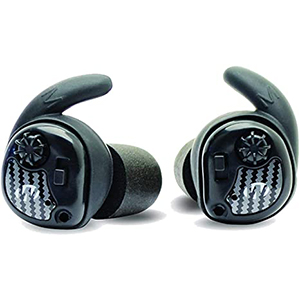
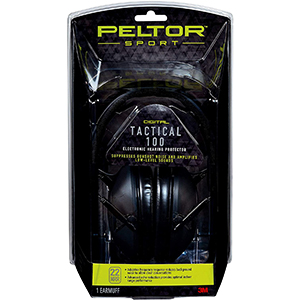
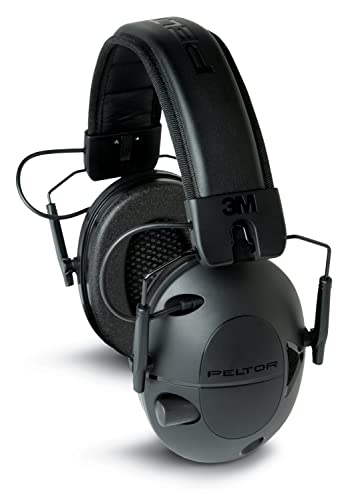
The Peltor Sport Tactical 100 earns its spot on this list because of one feature most entry-level earmuffs skip entirely: variable suppression time. Most electronic earmuffs cut out fast and then take a fixed amount of time to restore amplification. The Tactical 100 lets you adjust gunshot suppression time to help reduce echo bleed-over in indoor settings. If you split your time between an indoor range and outdoor hunting (which most serious shooters do), that adjustment matters.
The NRR 22 dB rating matches the Howard Leight above, making this a comparable choice on paper for noise reduction. Where the Peltor pulls ahead is in that indoor-outdoor versatility and the overall build polish you'd expect from the 3M/Peltor name. Volume control is straightforward, and the cups are well-padded for longer wears.
This is a great option if you're looking for one pair of earmuffs that handles both your weekend range sessions and your fall hunting season without compromise. It's priced a step above the Howard Leight but delivers meaningfully better indoor performance as a result.
Pros:
Cons:
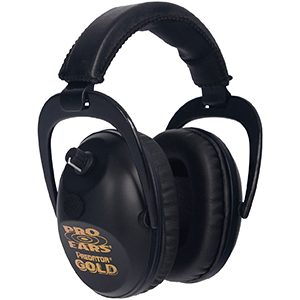
The Pro Ears Predator Gold is the serious hunter's choice, and the specs back that up. At NRR 26, it offers the highest noise reduction of any passive-rated option on this list. But the real differentiator is the dual military-grade circuitboards with gold connectors, housed independently in each ear cup. That construction enables something no other earmuff here can offer: fully independent volume control per ear.
Why does per-ear volume control matter? If you have any degree of asymmetrical hearing loss — which many hunters over 40 do — you can compensate by boosting the weaker ear. It also lets you fine-tune situational awareness based on where sounds are coming from. Pro Ears' proprietary DLSC (Dynamic Level Sound Compression) technology is designed to eliminate the "tinny" or hollow sound that cheaper electronics introduce, delivering full-spectrum, natural sound reproduction that's genuinely impressive.
You're paying a premium for all of this, and it shows in the fit and finish. The contoured ear cups seat properly against the head, the materials feel dense and well-made, and these are the kind of earmuffs you buy once and use for a decade of hunting seasons. If budget is no object and you spend serious time in the field, the Predator Gold is the top pick on this list.
Pros:
Cons:
The Walker's Ultimate Quad Connect does something none of the other earmuffs on this list do: it connects to your phone via Bluetooth and includes an integrated communication microphone so you can make and receive calls without removing your hearing protection. If you're a guide, a hunting outfitter, or someone who coordinates with a large group in the field, that hands-free capability is genuinely useful.
The NRR 27 dB rating is the highest on this list, making it excellent protection for high-powered rifle shooting or situations where you're close to multiple shooters. The "Quad" in the name refers to four microphones — two per side — which provide better directional sound localization than two-mic setups. You hear where sounds are coming from more accurately, which is critical when tracking game or navigating thick brush with a partner.
The Bluetooth sync works reliably with most Android and iOS devices. Call quality through the integrated mic is acceptable for outdoor communication, though not conference-call quality. The tradeoff for all these features is a slightly bulkier profile and a higher price point. But for the hunter who wants one multi-purpose set of earmuffs that handles range days, field time, and phone calls, this is the pick. If you want to pair your range gear with the best shooting accessories, also check out our guide to the best AR mag pouches for belt carry.
Pros:
Cons:
The AXIL MX leads this list on raw sound amplification. It boosts safe ambient sounds up to 6 times their original level, which is the highest amplification factor of any earmuff reviewed here. For hunters tracking quietly moving game at a distance, or for anyone with some degree of existing hearing loss, that extra amplification headroom makes a real difference in the field.
Button-controlled volume means you don't need to fiddle with dial controls while wearing gloves or in the dark. The synced volume controls on both cups adjust simultaneously, keeping sound balanced. AXIL designed this for range, job site, and hunting use, so the build is tough enough for extended outdoor sessions. The earcup housing dampens external vibration noise, and the interior cushioning seals well against the head to maximize passive protection alongside the active electronics.
The AXIL MX is a newer entrant in 2026 compared to legacy brands like Howard Leight and Peltor, but it earns its place here on amplification performance alone. If your biggest priority is hearing every subtle sound in your environment — not just talking to your hunting partner — this is the pick.
Pros:
Cons:
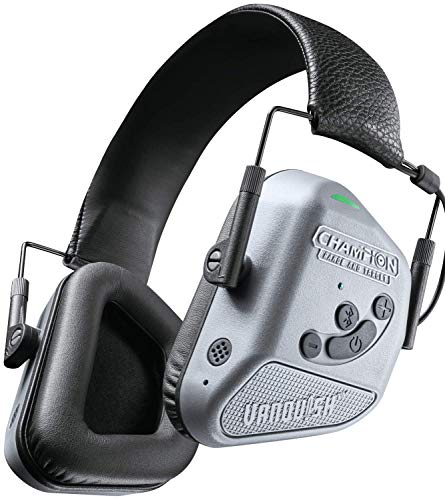
The Champion Range & Target Pro Elite Vanquish rounds out this list as a versatile option from a brand that's been a staple in the shooting sports world for decades. Champion markets this as a top-of-the-line product made from high-quality materials, and while that positioning is ambitious, the Vanquish does deliver a capable and well-built electronic earmuff at a competitive price.
The grey colorway is subdued and practical. The overall construction feels solid, and Champion's reputation in the shooting sports category — spanning clay targets, range accessories, and protective gear — means you're getting a product that's been refined over many product cycles. The electronics are straightforward and easy to operate, making this a good option for newer hunters or those buying their first pair of electronic earmuffs.
It won't outperform the Pro Ears Predator Gold or Walker's Quad Connect on specs, but for someone who wants reliable hearing protection from a trusted shooting brand without spending top dollar, the Vanquish delivers. It pairs naturally with other shooting range gear — if you're building out your kit, our guide to the best airsoft Glocks covers more gear worth looking at for practice and range use.
Pros:
Cons:
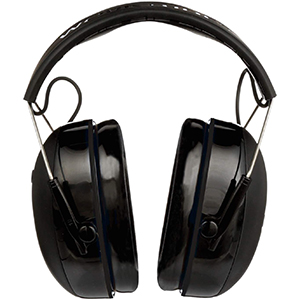
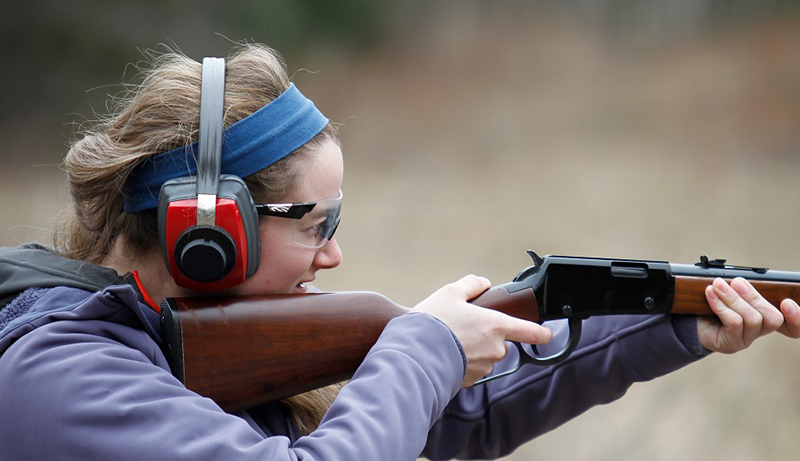
NRR stands for Noise Reduction Rating. It's the standardized number printed on every pair of hearing protection, representing how many decibels of noise the product blocks. For most hunters shooting rifles or shotguns outdoors, an NRR of 22 to 26 is the practical sweet spot. Here's a quick guide:
Don't fall into the trap of assuming more NRR always equals better. Extremely high passive protection can make ambient sound nearly inaudible, which defeats the purpose of wearing electronic earmuffs in the first place.
Passive hearing protection (standard foam earplugs or non-amplified earmuffs) blocks all sound indiscriminately. They're cheap and effective at blocking noise, but they leave you deaf to your environment. Electronic earmuffs use built-in microphones to amplify safe ambient sounds while cutting off any impulse noise — like a gunshot — above a threshold (usually 82–85 dB).
Earcup profile is often overlooked until you're trying to mount a rifle and the stock is catching on a bulky cup. Low-profile designs like the Walker's Razor Slim are specifically engineered to stay out of the way of your cheek weld. If you primarily hunt with a shotgun or handgun, standard cup depth is fine. But if you're a rifle hunter, especially with a bolt action, this is a feature worth paying for. Consider also:
Most electronic earmuffs run on AAA batteries, and battery life ranges from 200 to 350 hours on quality models. For a hunting season, that's more than adequate — but carry spares anyway. A few things to evaluate:
The Howard Leight Impact Sport is the best overall pick for most hunters in 2026 — it delivers solid NRR 22 protection, reliable electronic amplification, and low-profile earcups at an accessible price. If you want premium performance, the Pro Ears Predator Gold with NRR 26 and per-ear volume control is the top-tier option. For hunters who need Bluetooth connectivity, the Walker's Ultimate Quad Connect with NRR 27 is the best choice.
Foam earplugs protect your hearing but block all sound equally — including game movement, partner communication, and safety signals. For hunting, electronic earmuffs are strongly recommended because they amplify safe ambient sounds while automatically suppressing harmful impulse noise like gunshots. You get both protection and full situational awareness, which is critical in the field. Foam plugs alone are acceptable for range-only use where situational awareness is less important.
An NRR of 22 dB is sufficient for most deer hunting scenarios involving rifles or shotguns in open outdoor environments. That's the rating on both the Howard Leight Impact Sport and the Peltor Sport Tactical 100, and both are widely used and trusted by hunters. If you're shooting high-powered rifles at an indoor range or in an enclosed blind with echoing shots, consider stepping up to NRR 26 or 27, or use double protection by wearing foam plugs under your earmuffs.
Yes, but it can compromise the seal. The effectiveness of any earmuff depends on how tightly the cup cushions seal against your head. Wearing a thick winter hat or beanie underneath breaks that seal and reduces the actual noise attenuation you receive — even if the rated NRR is high. For cold-weather hunting, look for earmuffs with larger, deeper cups or gel cushions that seat more effectively over thin hat liners. Avoid thick-woven beanies under earmuffs during active shooting.
Most electronic hunting earmuffs run on AAA batteries and last between 200 and 350 hours of active use. The Howard Leight Impact Sport, for example, is rated at around 350 hours. With auto power-off features enabled, real-world battery life often exceeds rated hours. For a standard hunting season with occasional range sessions, one set of fresh batteries at the start of the season is typically all you need — but it's always smart to pack a spare set.
In practice, each 3 dB increase in NRR cuts perceived loudness roughly in half. Going from NRR 22 to NRR 27 means meaningfully more protection at the eardrum level, which adds up over a full day of shooting. For casual hunters who fire a box of shells per season, NRR 22 is more than enough. For competitive shooters, guides, or anyone spending many hours at a range or in multi-person hunting setups with frequent shots, the jump to NRR 26 or 27 is worth it.
Your hearing is one of the few things you can't replace once it's gone — and in 2026, there's no reason to sacrifice it when quality electronic hearing protection is available at every price point on this list. Start with the Howard Leight Impact Sport if you want the best value, step up to the Pro Ears Predator Gold if you're a serious hunter who demands the best, and consider the Walker's Ultimate Quad Connect if you want Bluetooth and top-tier NRR in one package. Pick the one that matches how you hunt, and get out there protected.


About Lindsey Carter
Lindsey and Mike C. grew up in the same neighborhood. They also went to the same Cholla Middle School together. The two famillies from time to time got together for BBQ parties...Lindsey's family relocated to California after middle school. They occasiotnally emailed each other to update what's going on in their lives.She received Software Engineering degree from U.C. San Francisco. While looking for work, she was guided by Mike for an engineering position at the company Mike is working for. Upon passing the job interview, Lindsey was so happy as now she could finally be back to where she'd like to grow old with.Lindset occasionally guest posted for Mike, adding other flavors to the site while helping diverse his over-passion for baseball.
You can get FREE Gifts. Or latest Free phones here.
Disable Ad block to reveal all the info. Once done, hit a button below
 im
im