The differences between softball and baseball come down to ball size, field dimensions, pitching style, and game length — but those basics only scratch the surface. Whether you're a parent figuring out which sport fits your kid, or a player looking to switch between the two, understanding these distinctions helps you pick the right gear, train properly, and enjoy the game more. Both sports share DNA as bat-and-ball games, but they've evolved into distinct experiences that demand different skills and equipment. Check out our sports and outdoors section for more gear guides and sport breakdowns.

You might think softball is just baseball with a bigger ball. That's a common misconception. The rule differences affect everything — from how you swing to how you position your body in the field. Pitchers use completely different mechanics. Baserunners follow different timing. Even the mental game shifts because of how fast plays develop on a smaller diamond.
In this guide, you'll get a clear breakdown of every major difference, along with practical advice on gear, training, and choosing which sport to play or watch. Let's dig in.
Contents
The gear you need for softball versus baseball looks similar at a glance, but the specs differ significantly. Using the wrong equipment doesn't just hurt performance — in organized leagues, it can get you ejected from a game. Here's what sets the two apart.
This is the most obvious difference between softball and baseball. The balls aren't even close in size:
Softballs are also softer (despite the name being somewhat ironic at higher levels). The larger ball affects grip, throwing mechanics, and how the ball travels off the bat. A softball's bigger surface area creates more air resistance, which is one reason softball fields are smaller — the ball simply doesn't travel as far.
The color differs too. Softballs are typically optic yellow, while baseballs are white with red stitching. The yellow color helps batters see the ball against various backgrounds, which matters given the shorter pitching distance in softball.
Bats for each sport have different maximum lengths, weights, and barrel diameters:
| Specification | Softball | Baseball |
|---|---|---|
| Max Length | 34 inches | 42 inches |
| Max Barrel Diameter | 2.25 inches | 2.625 inches |
| Typical Weight | 26-30 oz | 28-34 oz |
| Common Materials | Composite, aluminum | Wood (pro), aluminum/composite (amateur) |
| Drop Weight Range | -8 to -13 | -3 to -13 (age dependent) |
If you're a power hitter looking at softball specifically, choosing the right bat matters enormously. A good fastpitch softball bat for power hitters can transform your game at the plate. The shorter, lighter bats in softball require quicker hands through the zone since you have less reaction time.
Softball gloves are larger than baseball gloves — typically 11.5 to 14 inches compared to 9 to 12.75 inches for baseball. You need that extra pocket size to handle the bigger ball. Catchers in both sports wear full protective gear, but softball catchers often wear a helmet-style mask rather than the separate skull cap and cage that baseball catchers use.
Other gear differences include:
Pro tip: Never use a baseball glove for softball or vice versa. A baseball glove won't secure a softball properly, and a softball glove's oversized pocket makes baseballs rattle around, killing your transfer speed on double plays.
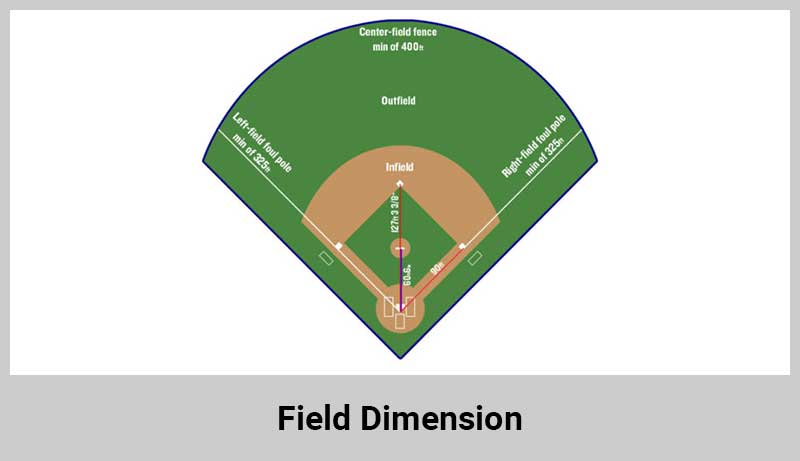
The playing fields for these two sports differ in almost every measurement. These aren't arbitrary — they're calibrated to create similar game flow despite the different ball sizes and pitching styles.
Here's how the fields compare:
The smaller softball diamond means plays happen faster. A ground ball to shortstop gives the fielder less time to set their feet and throw. This compressed geometry is why softball fielders need quick reaction times — according to Wikipedia's softball overview, the ball reaches home plate from the pitcher in roughly the same perceived time in both sports despite the different distances.
This is where the differences between softball and baseball become most dramatic:
The underhand windmill motion in softball generates speed differently. Top fastpitch pitchers throw 70+ mph, which at 43 feet gives batters roughly the same reaction time as a 95+ mph baseball pitch at 60.5 feet. The mound in baseball gives pitchers a downhill advantage, creating a natural downward plane on the ball.
Softball pitchers can legally pitch every game without the same arm stress that destroys baseball pitchers' shoulders and elbows. The underhand motion is more natural for the shoulder joint. That's why you'll see ace softball pitchers throw complete games back-to-back in tournaments, while baseball teams rotate through five or more starters.
Standard game lengths differ between the two sports:
Softball games also tend to run shorter in real time — typically 1.5 to 2 hours compared to baseball's 2.5 to 3+ hours. The shorter field dimensions mean less dead time between plays, and the 7-inning format keeps things moving.
Both sports use a mercy rule (also called a run rule) at most amateur levels. In softball, the game often ends if one team leads by 8+ runs after 5 innings. Baseball mercy rules vary more widely by league.
Whether you're choosing between softball and baseball for yourself or helping a young athlete decide, here's a practical roadmap for getting into either sport.
Consider these factors when deciding which sport to pursue:
If you're outfitting yourself for outdoor sports in general, having the right carrying setup helps. A quality chest rig works great for carrying essentials to the field — phone, keys, and snacks for those long tournament days.
Here's what you need for your first day at either sport:
For softball:
For baseball:
Don't buy a bat right away. Most recreational leagues and beginner programs have shared bats you can use while figuring out your preferred weight and length. Once you know your swing, invest in a bat that matches your strength and speed.
The gap between recreational and competitive play is massive in both sports, but the differences between softball and baseball become more pronounced as skill level increases.
If you're just starting out in either sport, prioritize these fundamentals:
At beginner levels, the sports feel quite similar. You're learning the same basic concepts: hit the ball, catch the ball, throw the ball, run the bases. The differences in field size and pitching are calibrated so that the perceived difficulty stays roughly equal at each level.
For outdoor practice sessions, protect your hearing during batting practice if you're in an enclosed cage. The same ear protection used for shooting sports works well in indoor batting cages where the ping of aluminum bats echoes loudly.
At competitive levels, the sports demand increasingly different skill sets:
Softball-specific advanced skills:
Baseball-specific advanced skills:
One major tactical difference: softball doesn't allow leadoffs. Baserunners must keep contact with the base until the pitcher releases the ball. In baseball, runners can take leads and steal on the pitcher's motion. This single rule difference creates entirely different strategic games on the basepaths.
Advanced players in both sports often crosstrain. Many baseball players have improved their hand-eye coordination by hitting softballs in the cage, and softball players sometimes take baseball BP (batting practice) to develop bat speed against a smaller target. If you're tracking your practice with a camera setup, a long-range camera system positioned behind home plate captures your swing mechanics even during evening practices.
Whether you play softball or baseball, your gear represents a real investment. Proper maintenance extends the life of your equipment and keeps it performing at its best.
Composite bats (common in softball and youth baseball) need a break-in period:
Storage tips for all bat types:
Wood bats (used in professional baseball and some amateur leagues) need different care. Keep them dry, apply a light coat of linseed oil once per season, and always hit with the label up to align the wood grain properly.
A quality leather glove lasts years with proper care. Here's your maintenance routine:
Avoid these common mistakes that ruin gloves:
Maintaining your gear is similar to maintaining any sporting equipment. Just like you'd use the right cleaner for a dirt bike, using sport-specific products on your glove and bat keeps them in top shape.
For aluminum bats, cleaning is simpler. Wipe them down with a damp cloth, check for dents, and store them properly. Aluminum doesn't need conditioning, but it does need protection from extreme temperatures that can weaken the metal over time.
If you play both sports, keep separate gear for each. Using a softball glove for baseball or vice versa accelerates wear because the pocket isn't taking impacts at the correct angles for either ball. Invest in dedicated equipment for each sport and your gear will last significantly longer.
Neither sport is objectively easier. Softball has a larger ball that's easier to make contact with, but the shorter pitching distance gives you less reaction time. Baseball has a smaller ball and larger field, demanding more arm strength. The difficulty is balanced differently — not greater or lesser in either sport.
No. Baseball bats and softball bats have different barrel diameters, weights, and certification standards. Most leagues require sport-specific bats, and using the wrong one can get you called out or ejected. Beyond rules, a baseball bat's dimensions aren't optimized for hitting a larger softball effectively.
The larger ball in softball was part of the original game design in 1887 when softball was created as an indoor version of baseball. The bigger ball travels slower through the air, allowing the game to be played on a smaller field. The size difference is central to how all other rules and dimensions were calibrated.
Softball uses an underhand windmill motion from a flat circle at 43 feet. Baseball uses an overhand delivery from a raised mound at 60.5 feet. Softball pitchers can throw more frequently without injury due to the natural underhand arm path. Baseball pitchers need strict pitch counts and rest days to avoid shoulder and elbow damage.
In fastpitch softball, you can steal bases but only after the pitcher releases the ball. You cannot take a leadoff like in baseball. In slow-pitch softball, stealing is usually not allowed at all. This no-leadoff rule fundamentally changes baserunning strategy compared to baseball.
Baseball offers more total roster spots at the college level (around 11.7 scholarships per NCAA Division I team split among 35 players). Softball offers 12 scholarships per team split among roughly 20-22 players, meaning each player typically gets a larger share. Both sports offer opportunities at D1, D2, D3, NAIA, and junior college levels.
Most children play tee-ball together regardless of gender until ages 7-8. Around age 9-10, leagues typically separate into baseball and softball. There's no rule preventing anyone from playing either sport, but organized league availability often drives the decision. Many athletes play both sports recreationally through their teens.


About Lindsey Carter
Lindsey and Mike C. grew up in the same neighborhood. They also went to the same Cholla Middle School together. The two famillies from time to time got together for BBQ parties...Lindsey's family relocated to California after middle school. They occasiotnally emailed each other to update what's going on in their lives.She received Software Engineering degree from U.C. San Francisco. While looking for work, she was guided by Mike for an engineering position at the company Mike is working for. Upon passing the job interview, Lindsey was so happy as now she could finally be back to where she'd like to grow old with.Lindset occasionally guest posted for Mike, adding other flavors to the site while helping diverse his over-passion for baseball.
You can get FREE Gifts. Or latest Free phones here.
Disable Ad block to reveal all the info. Once done, hit a button below
 im
im