Over 30% of the energy your solar panels produce can be lost simply by using the wrong charge controller — and most people have no idea that's even happening. If you're trying to sort out the PWM vs MPPT solar charge controller debate before buying, you're making a smart move. Whether you're setting up a rooftop system, outfitting an RV, or powering a remote cabin, this decision affects how much usable energy you actually get every single day. And just like picking the right gear for a day outdoors — the way you'd think carefully about choosing an action camera for outdoor adventures — the right controller choice depends entirely on your specific setup.

A solar charge controller sits between your solar panels and your battery bank, regulating the flow of electricity so your batteries charge safely and efficiently. Without one, panels would dump uncontrolled current into your batteries and destroy them fast. The two main types — PWM (Pulse Width Modulation) and MPPT (Maximum Power Point Tracking) — work in fundamentally different ways, and understanding those differences will make your decision a whole lot clearer.
This guide walks you through both technologies, when each one makes sense, the mistakes to avoid, and how to keep whichever one you buy running for years. By the end, you'll know exactly which direction to go — no engineering degree required.
Contents
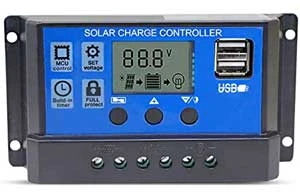
The charge controller might be the least glamorous component in a solar system, but it does some of the heaviest lifting. It protects your batteries from overcharging, stops current from flowing backward at night, and — depending on the type — can dramatically increase how much energy you pull from your panels each day. According to Wikipedia's overview of solar charge controllers, MPPT technology can improve energy harvest by 10–30% over simpler designs under real-world conditions. That's a meaningful gap, not a rounding error.
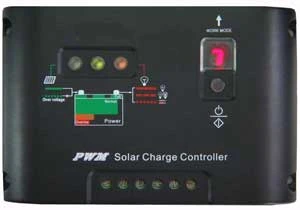
PWM stands for Pulse Width Modulation. Rather than simply switching the current on or off, a PWM controller fires rapid pulses of electricity into your battery. As the battery fills up, those pulses get shorter and shorter — sort of like tapping the brakes gently instead of stomping on them. The result is a smooth, controlled charge that prevents overcharging without generating a ton of waste heat.
Here's the key limitation: a PWM controller works by pulling your panel's voltage down to match your battery's voltage. If your panel is producing 18V but your battery is sitting at 12V, the controller essentially discards that 6V gap. For small systems where the panel voltage is already close to the battery voltage, that's not a big deal. But for larger systems or panels with higher voltage ratings, it's a real efficiency penalty that adds up fast.
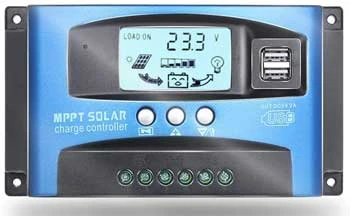
MPPT stands for Maximum Power Point Tracking. This type of controller is considerably more sophisticated. It continuously scans your panel's output to find the exact voltage and current combination that produces the most power — the so-called maximum power point — and then converts that power efficiently into the right voltage and current for your battery. Think of it like a constantly adjusting transmission that keeps your engine in its most efficient range at all times.
That dynamic optimization means you capture more energy across the entire day, especially during the low-angle morning and evening hours and on partly cloudy days when panel output swings around constantly. If you've ever read about how radar detectors work — constantly scanning and adjusting to their environment in real time — MPPT controllers work on a surprisingly similar principle. They never stop looking for a better operating point.
The PWM vs MPPT solar charge controller decision isn't really about which one is better in the abstract — it's about which one fits your system. Your panel voltage, your battery bank voltage, and your total wattage all factor into the answer. Getting this right is similar to any careful gear selection process, like knowing what matters when you're comparing smart thermostats — the specs on paper have to match your actual situation.
Here's the single most important rule: if your solar panel's Voc (open-circuit voltage — the voltage produced with no load connected) is close to your battery's charging voltage, a PWM controller will serve you just fine. If there's a significant gap between those two numbers — or if you're wiring panels in series to get a higher total voltage — then MPPT is the clear choice.
A standard 12V panel typically has a Voc around 21–22V and a Vmp (voltage at maximum power) around 17–18V. A 12V battery charges at roughly 14–14.8V. A PWM controller bridging that gap wastes some power, but not catastrophically. Now consider a 60-cell or 72-cell grid-tie panel with a Voc of 37–45V connected to the same 12V battery. With PWM, the controller dumps most of that voltage difference as wasted energy. With MPPT, that high voltage gets converted into additional current, giving your battery measurably more charge per hour of sunlight.
Both controller types support multiple battery chemistries — flooded lead-acid, sealed AGM, gel, and lithium — through programmable charging profiles. These profiles manage the three main stages: bulk charging (pushing current in as fast as the battery can handle), absorption (tapering off as the battery approaches full), and float (a gentle maintenance charge). Mid-range and higher MPPT controllers also include temperature compensation, which adjusts the target charge voltage based on ambient temperature. That matters more than people realize — a battery on a cold winter morning needs a higher charge voltage than the same battery on a hot summer afternoon.
| Feature | PWM Controller | MPPT Controller |
|---|---|---|
| Typical Efficiency | 70–80% | 93–98% |
| Typical Cost Range | $15–$60 | $80–$400+ |
| Best Panel Match | Low-voltage panels near battery voltage | Higher-voltage panels, mismatched systems |
| Best System Size | Under 200W | 200W and above |
| Battery Voltage Support | 12V, 24V | 12V, 24V, 48V |
| Temperature Compensation | Rarely included | Common on mid-range and up |
| Monitoring / Data Logging | Basic LED indicators | LCD display, app connectivity |
| Lithium Battery Support | Some models | Most mid-range and premium models |
It's easy to get lost in specs. But the PWM vs MPPT solar charge controller question looks very different depending on what you're actually trying to power and where your setup lives.
Say you've got a couple of 100W panels on the roof of your RV, connected to a 12V AGM battery bank. You're charging phones, running LED lights, maybe powering a small fan or a 12V cooler. In this case, a solid PWM controller in the $30–$50 range is absolutely adequate. The efficiency difference between PWM and MPPT at this scale rarely justifies a $150–$200+ price premium. You'd recover the cost difference over years, not months.
Small systems with closely matched voltages are where PWM genuinely shines. The same logic applies to pop-up campers, small boat systems, solar-powered trail cameras, and basic garden shed setups. If you enjoy gearing up for outdoor trips and keeping everything powered in the field, a compact solar system with a quality PWM controller pairs naturally with the rest of your kit — just like picking the right tools matters when you're putting together a beginner woodworking tool kit on a budget.
Now scale things up to a remote cabin with 600–1,200W of panels feeding a 24V or 48V lithium battery bank. Here the efficiency gap becomes very real. An MPPT controller running at 96% efficiency versus a PWM controller at 76% efficiency could mean harvesting 20% more energy every single day. Over months and seasons, that difference translates to meaningful extra kilowatt-hours — which in an off-grid scenario means fewer nights with a dead battery bank.
Larger systems also tend to use higher-voltage panels that a PWM controller simply can't handle correctly. If you've tackled something like figuring out how to choose and replace a car battery, you already know that voltage compatibility isn't optional — the same principle applies here, just at a larger scale with more money on the line.
Pro tip: If your solar panel's open-circuit voltage (Voc) is more than 5V higher than your battery's charging voltage, an MPPT controller will almost always pay for itself within a single season of use.
Even people who've done their homework make avoidable errors when putting a solar system together. These are the most common ones, and knowing about them ahead of time can save you real money.
The most frequent mistake is pairing a PWM controller with panels that have a significantly higher Voc than the battery system. A typical scenario: someone buys a "100W 12V panel," doesn't realize its Voc is actually 22V, and connects it to a 12V battery through a budget PWM controller. The system works, but it's throwing away energy constantly. The controller is clamping the panel's output down to the battery level and dissipating the difference as heat.
Always check both Vmp (voltage at maximum power) and Voc from your panel's spec sheet before choosing a controller. If those numbers don't closely match your battery's charging voltage, MPPT is the smarter path. Getting the specs right matters in every equipment decision — it's the same kind of thing you'd pay attention to when learning how to detail your car at home and discovering that using the wrong product on the wrong surface can cause real damage.
Solar charge controllers have operating temperature ranges, and exceeding them shortens their lifespan. Mounting a controller inside a poorly ventilated RV compartment or an enclosed outdoor box can push temperatures well past the rated limit on hot days. MPPT controllers in particular generate more internal heat because they're doing more complex power conversion — so airflow around the unit matters.
Always check the IP rating (Ingress Protection — the standardized measure of how well a device is sealed against dust and moisture) before installing a controller in any exposed or humid location. A unit rated only for indoor use will not survive mounted in a boat's engine compartment or a damp outdoor enclosure. Give it a ventilated, shaded spot with a few inches of clearance on all sides, and it'll last far longer.
Here's the good news: solar charge controllers are among the lowest-maintenance components in any solar system. No moving parts, no fluids, no consumables. A quality unit can run for a decade or more without much attention. But "low maintenance" isn't the same as "no maintenance," and a little periodic attention keeps things running right.
Every few months, take five minutes to look things over. Check all wiring connections at the controller terminals — connections can loosen gradually, especially in environments with vibration like RVs or boats. Loose terminals create resistance, and resistance creates heat, and heat is what kills electronics over time. Also give the controller housing a wipe down if it's in a dusty location, and make sure any ventilation slots aren't blocked by insulation, debris, or accumulated grime.
If your controller has a display or pairs with a monitoring app, glance at the reported values and make sure they're in the expected range. Charging voltage should match your battery type's spec. Current output should vary sensibly with available sunlight. If anything looks wrong — lower-than-expected output on a sunny day, erratic readings, a controller that runs hotter than usual — investigate upstream. A shaded panel, a loose fuse, or a corroded connection is usually the culprit.
A quality charge controller should last many years under normal use. But certain signs tell you it's time to swap it out: the display stops functioning correctly, the unit runs unusually hot even at low charge currents, your batteries are consistently undercharging or overcharging despite correct settings, or you spot physical damage like swollen capacitors or a faint burnt smell around the unit. If you've significantly expanded your panel array — say from 200W to 800W — your existing PWM controller may also simply be undersized for the new load, which is reason enough to upgrade to MPPT.
Upgrading to lithium batteries is another common trigger for replacing your controller. Lithium cells require a specific charging profile that many older PWM units don't support properly. Charging lithium with the wrong profile can permanently damage cells — and lithium batteries are expensive enough that the cost of a new controller is a bargain compared to replacing a battery bank. If you're managing your vehicle's electrical systems and enjoy hands-on projects like this, you'll find more related guides in our automotive section.
By now you've got a solid feel for both technologies. Here's how they stack up when you take a clear-eyed look at where each one actually belongs.
PWM controllers are simple, affordable, and reliable. They work beautifully for small, budget-conscious systems where panel voltage is already close to battery voltage. If you're building a starter solar setup — a single panel on a garden shed, a basic RV charging system, or a solar trickle charger for a vehicle in long-term storage — PWM is a perfectly reasonable choice. You spend less upfront, the wiring is simpler, and there are fewer settings to configure or get wrong. For systems under 200W with 12V batteries and matched panels, the efficiency advantage of MPPT often doesn't recover its cost premium in any reasonable timeframe.
PWM's limitations show up when you try to scale. The technology can't step voltage down the way MPPT can, so it can't take full advantage of higher-voltage panels. And because PWM controllers tend to have lower maximum current ratings, growing a PWM-based system often means buying a new controller anyway. Picking between two types of technology based on your actual use case — not just which one sounds more advanced — is the right approach here, the same way you'd think through a decision like choosing between wired and wireless headphones: one isn't universally better, it just depends on what you need.
MPPT controllers cost more, but they earn that premium back through higher efficiency and far greater flexibility. For systems over 200W, for panels with Voc ratings significantly above battery voltage, and for anyone running 24V or 48V battery banks, MPPT is almost always the better long-term investment. The additional energy harvest closes the price gap over time — how quickly depends on your panel size and local solar resource, but most setups see the payoff within one to three seasons of regular use.
MPPT controllers also give you more room to grow. If you think you might add panels down the road, buying an MPPT controller with some headroom now means you won't be shopping for a replacement in two years. Better monitoring, wider battery chemistry support, and app connectivity are nice bonuses too. The bottom line is that MPPT is the controller for anyone building a system that's meant to last and potentially expand — not a one-season experiment.
The PWM vs MPPT solar charge controller decision comes down to one honest question: does your system actually need the extra efficiency, and does the math make sense for your budget? Pull your panel spec sheet, write down the Voc and Vmp, note your battery bank voltage, and run a quick comparison against the table above — that alone will point you clearly toward one or the other. If you're still exploring your options or want to dig into related gear decisions, head over to our automotive and electronics guides for more hands-on buying advice built around real-world use.


About Lindsey Carter
Lindsey and Mike C. grew up in the same neighborhood. They also went to the same Cholla Middle School together. The two famillies from time to time got together for BBQ parties...Lindsey's family relocated to California after middle school. They occasiotnally emailed each other to update what's going on in their lives.She received Software Engineering degree from U.C. San Francisco. While looking for work, she was guided by Mike for an engineering position at the company Mike is working for. Upon passing the job interview, Lindsey was so happy as now she could finally be back to where she'd like to grow old with.Lindset occasionally guest posted for Mike, adding other flavors to the site while helping diverse his over-passion for baseball.
You can get FREE Gifts. Or latest Free phones here.
Disable Ad block to reveal all the info. Once done, hit a button below
 im
im