You're staring at a shelf — or more likely a browser tab — full of RC nitro fuel options, and they all look basically the same. Different percentages, different brands, similar prices. It's easy to grab the wrong one and end up with poor engine performance, excess smoke, or worse, premature wear. In 2026, there are more choices than ever, and picking the right nitro fuel matters more than most new hobbyists realize.
RC nitro fuel is a blend of nitromethane (the power source), methanol (the carrier), and oil (the lubricant). The nitro percentage determines how much punch your engine gets. Higher nitro means more power — but also more heat and faster wear if your engine isn't tuned for it. The oil content keeps your engine alive between tune-ups. Get either of these wrong, and you'll be rebuilding carbs sooner than you planned.
Whether you're just getting started in the arts and hobbies world of RC vehicles or you're a seasoned racer looking to dial in your setup, this guide covers the top RC nitro fuels available right now. We've broken down the nitro percentages, oil blends, and real-world performance so you can make a smart buy the first time. If you're also shopping for compatible gear, check out our picks for the best RC battery connectors — useful when you're running electric backups alongside your nitro rig.

Contents


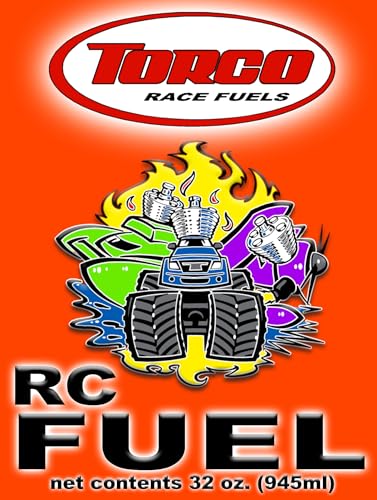


Below you'll find in-depth reviews of each fuel on this list. We cover nitro content, oil blend, engine compatibility, and the real-world situations where each one shines or falls short. Read through your top two or three picks before deciding.
If you own a Traxxas RC car or truck, this fuel was made with your engine in mind. The 20% nitro content hits the sweet spot for most 1/10 and 1/8 scale vehicles — enough power for spirited backyard bashing without the heat stress that comes from higher blends. Traxxas engineered this formula alongside their engines, which shows in how cleanly it runs through the carb. You get consistent fuel metering, reliable idle, and smooth throttle response right out of the bottle.
The quart size is practical for most hobbyists. You're not stuck with a giant gallon jug if you only run your truck on weekends. The can is sealed well and pours cleanly into standard fuel bottles without spillage. Traxxas includes a proprietary oil blend that keeps internal engine components protected during long run sessions. If your Revo, Jato, or Nitro Slash has been sitting a while, this fuel also breaks in fresh engines nicely — the oil content is generous enough for break-in runs without needing to switch blends.
The one downside is brand loyalty pricing. You'll pay a small premium over generic brands for the Traxxas label. But if you're already invested in a Traxxas platform and want a fuel that's been factory-tested for those engines, the extra few dollars per quart are well spent. This is the go-to starting point for anyone new to nitro RC vehicles who wants to skip the guesswork.
Pros:
Cons:
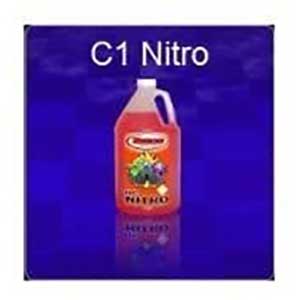
This is Traxxas's high-octane offering — 33% nitro content designed specifically for racing applications. If you're running a purpose-built race truck or pushing your engine to the limit on a track, this is the blend you want. The power jump over 20% is noticeable, especially at the top end of the RPM range. Your engine will rev harder and pull stronger out of corners.
But there's a real trade-off here. Higher nitro means more heat, and heat kills engines that aren't tuned properly. You'll need your needle valves dialed in tighter and your glow plug matched to a hotter heat range. If you're already comfortable maintaining a nitro engine — adjusting the high-speed needle, running richer for break-in — this fuel rewards that knowledge with noticeably better performance. If you're still learning the basics of nitro tuning, stick with the 20% version and work your way up.
The Traxxas quart can is the same clean, no-mess design as their 20% version. Shelf life is solid when stored in a cool, dark location. For competitive club racing in 2026, 33% has become increasingly popular as engine technology has improved. This is a legitimate racing fuel, not just a marketing claim.
Pros:
Cons:
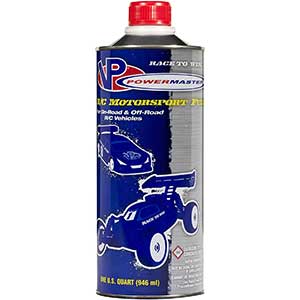
VP Racing is a name you'll hear at every serious motorsport event, from full-size drag strips to RC club tracks. Their 20% nitrofuel for RC vehicles brings professional-grade fuel chemistry to the hobby market at a price that makes bulk buying easy. The two-quart pack is practical — you're not constantly reordering, and the per-quart price drops compared to single-can purchases.
This fuel is formulated for 1/8 scale street and trail applications, which covers most of the popular platforms you'll encounter in club racing or backyard bashing. VP's advanced blending technology means consistent nitro distribution throughout the can — no settling, no separation. You get the same fuel quality in the last drop as you do in the first. Compatibility is broad: if your RC vehicle spec sheet calls for 20% nitro, this fuel works. It's a popular choice among local club racers who run a lot of gallons per season and need reliable performance run after run.
The packaging is clean and practical. Quart cans are easy to store and transport, which matters if you're heading to a track day or a park run. One thing to watch: VP's hobby line isn't always stocked at local hobby shops, so ordering online is usually your best move. The two-quart format makes that purchase decision easy to justify. For the price, this is one of the best-performing 20% blends on this list.
Pros:
Cons:
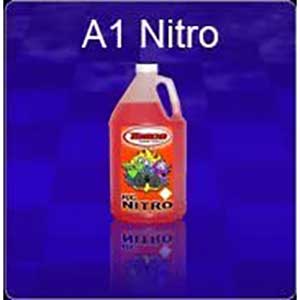
TORCO has been making performance fuels for decades, and their 30% nitro RC blend is proof that experience matters in fuel formulation. This is a step up from typical 20% blends but slightly more manageable than aggressive 33% formulas. The 30% sweet spot gives you a meaningful power increase while keeping engine temperatures in a range that's still forgiving for intermediate-level tuners.
TORCO's lubrication package is one of the highlights here. The oil blend is tuned to provide excellent protection at elevated temperatures — critical when you're running higher nitro content and your engine is working harder. Experienced nitro hobbyists who've had heat-related failures with other high-percentage fuels often appreciate TORCO's extra attention to the oil side of the formula. You're not just getting more power — you're getting that power with a safety net built in.
If you're familiar with running nitro engines and want to step up from 20% without going all the way to 33%, this TORCO blend deserves your attention. It runs cleanly, starts reliably, and doesn't demand the obsessive needle adjustment that some high-nitro fuels require. The gallon-size option is also available for high-volume runners, making it cost-effective for serious hobbyists. Just make sure your engine manufacturer's documentation supports 30% before you switch.
Pros:
Cons:
Most RC nitro fuels use dye — it's how you can tell at a glance how much is in the tank. But dye comes with a cost: it can gum up components over time and slightly reduce fuel efficiency at the lower end of the power curve. VP Racing's Pro Race 30 takes a different approach. This fuel is completely dye-free, and the difference shows in two specific areas: improved mileage and noticeably better bottom-end power.
The lubrication package is a standout. VP uses a multi-viscosity 9% synthetic/castor blend — combining the high-temperature stability of synthetic oil with the natural lubricity of castor. This combination is well-regarded in motorsport circles because castor oil clings to metal surfaces even when temperatures spike, providing a film of protection that synthetics alone can't always guarantee. The result is an engine that runs cooler and stays cleaner inside over the long term. Ultra-clean burn characteristics mean less residue building up in your exhaust and carb over time.
At 30% nitro, this is a fuel for serious hobbyists. You'll get strong pull across the RPM range, especially at the low end where many high-nitro fuels are weak. If you're running a competitive race platform or just want the smoothest power delivery available, VP Pro Race 30 earns its place on this list. The quart can is convenient; serious racers should look into buying in volume if this becomes your go-to fuel.
Pros:
Cons:
The VP Racing PowerMaster fill kit solves a practical problem that every nitro hobbyist eventually faces: getting fuel into your RC vehicle without spilling half of it on the ground. The kit format bundles VP's proven PowerMaster 20% nitro formula with the hardware you need to actually use it efficiently. It's a smart package for anyone setting up their first nitro station or replacing worn-out fueling gear.
The fuel itself is VP's flagship PowerMaster blend — 9% synthetic/castor oil lubrication, engineered for both off-road and on-road applications. This is the same core formula that club racers and serious hobbyists have relied on for years. At 20%, it's appropriate for most 1/8 scale RC platforms. You won't have tuning headaches, cold-start struggles, or lean-run damage when you use this fuel in compatible vehicles. VP specifically notes compatibility with all 20% RC vehicles, which is about as broad as it gets.
The fill kit component is underrated in its value. Quality fuel bottles and filler nozzles dramatically reduce the mess and waste of refueling in the field. If you're heading to a track day or a group run at a park, the kit format means you're prepared and professional about it. Think of it as a starter package that gives you the fuel AND the infrastructure. Pair this with a quality RC car setup — check out our guide to top RC cars for grass terrain if you're building out a new rig — and you're ready to run.
Pros:
Cons:
Before you pick a fuel, you need to understand a few core concepts. The wrong fuel can damage your engine — or at minimum leave power on the table. Here's what to look for in 2026.
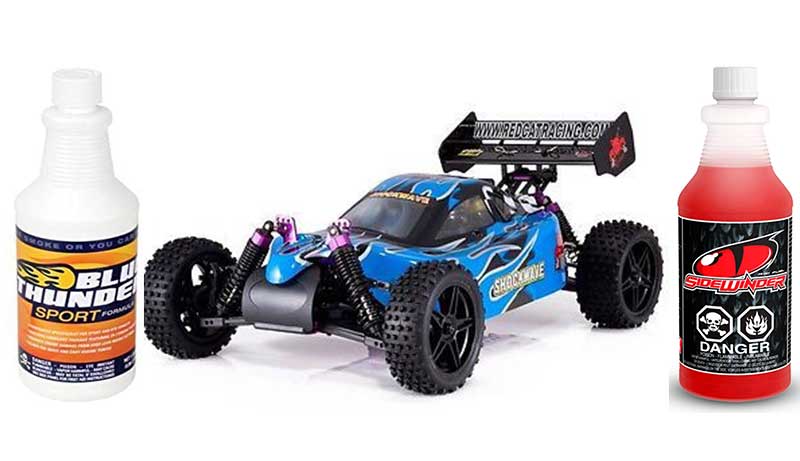
The nitro percentage is the single most important number on the label. Higher nitro = more power, more heat, more wear risk. Here's a simple breakdown:
Always check your engine manufacturer's documentation. Most engines ship with a recommended nitro range. Running too high burns them out. Running too low leaves performance on the table. If you're unsure, start at 20% and work up gradually. The same philosophy applies to understanding engine performance in other hobby motorsport contexts — our breakdown of the best go kart engines covers some of the same power-to-reliability trade-offs in a different format.
The oil in your fuel does the heavy lifting for engine longevity. Most RC nitro fuels use one of three approaches:
Oil content typically runs 8–12%. Higher oil percentages help during break-in. For normal running, 9–10% is standard and appropriate for most setups. Don't chase higher oil percentages thinking more is always better — excessive oil means less fuel per cc of engine displacement and can hurt power output.
Fuel consistency matters more than hobbyists often realize. A fuel that varies batch to batch forces you to re-tune between cans. The best brands — Traxxas, VP Racing, TORCO — invest in quality control. You get the same blend every time. That means once your engine is tuned, it stays tuned. Consistency is what separates racing fuels from bargain blends in practical terms. Cheap, off-brand nitro fuel may look identical on paper but can vary in nitro concentration by several percentage points between batches.
RC nitro fuel has a shelf life. Methanol is hygroscopic — it absorbs moisture from the air. Water contamination in your fuel tank causes rough running, hard starting, and corrosion inside your engine. Here's how to protect your fuel:
Proper storage also applies to your RC vehicle. If you're parking it for more than a few weeks, drain the fuel tank and run the engine briefly on clean fuel or glow fuel flush to clear the carb and tank. An empty or flushed system resists corrosion better than a tank left with stale fuel sitting in it.
Start with 20% nitro fuel. It's forgiving to tune, produces enough power for normal bashing and casual racing, and puts less stress on your engine while you're still learning the basics of glow plug selection and needle adjustment. Once you're comfortable tuning your engine, you can experiment with 25–30% blends for more performance.
Technically you can, but it's not recommended. Different brands use different oil blends, oil percentages, and base formulas. Mixing them can create inconsistent fuel chemistry that makes tuning difficult. You may also void manufacturer warranties on some engines. Stick to one brand and blend at a time, and flush your fuel system when switching.
A lean-running engine sounds high-pitched, runs very hot, and may shut off suddenly under load — this is dangerous and can destroy your engine quickly. A rich-running engine produces excessive smoke, has a sluggish throttle response, and may idle roughly or die at low speeds. Lean is the bigger risk. When in doubt, tune slightly rich and work toward ideal from there.
Running nitro content higher than your engine is designed for will increase operating temperatures beyond safe limits, accelerating wear on bearings, connecting rods, and sleeve liners. It can also cause lean runs if your needle valves aren't adjusted for the richer mixture. Always check your engine manufacturer's maximum recommended nitro percentage before stepping up. If you respect that limit and tune properly, higher nitro content is safe for supported engines.
Sealed cans of RC nitro fuel typically remain usable for 1–2 years when stored properly in a cool, dark location. Once opened, use the fuel within 6–12 months. Methanol absorbs moisture from the air over time, which contaminates the fuel and can cause starting problems and internal engine corrosion. Always store opened fuel in tightly sealed containers and inspect for cloudiness before use.
Yes — and it matters. RC airplane fuels typically carry higher oil content (16–20%) because aircraft engines run at sustained high RPMs with less cooling than ground vehicles. RC car and truck fuels generally use 8–12% oil content, which is optimized for the running patterns and cooling characteristics of ground vehicles. Using airplane fuel in a car engine can result in excess smoke, oil buildup, and power loss. Always use fuel rated for your specific vehicle type.


About Mike Constanza
For years, Mike had always told everyone "no other sport like baseball." True to his word, he keeps diligently collecting baseball-related stuff: cards, hats, jerseys, photos, signatures, hangers, shorts (you name it); especially anything related to the legendary player Jim Bouton.Mike honorably received Bachelor of Science degree in Business Administration from University of Phoenix. In his graduation speech, he went on and on about baseball... until his best friend, James, signaled him to shut it.He then worked for a domain registrar in Phoenix, AZ; speciallizng in auction services. One day at work, he saw the site JimBouton.com pop on the for-sale list. Mike held his breath until decided to blow all of his savings for it.Here we are; the site is where Mike expresses passion to the world. And certainly, he would try diversing it to various areas rather than just baseball.
You can get FREE Gifts. Or latest Free phones here.
Disable Ad block to reveal all the info. Once done, hit a button below
 im
im